Public Speaking for Executives: How Leaders Communicate with Gravitas Under Pressure
- March 11, 2026
- Gurleen Kaur
Public Speaking for Executives: How to Speak with Gravitas Under Pressure
- March 11, 2026
- Gurleen Kaur
Table of Content
Read summarized version with
Introduction: The Role of Public Speaking in Executive Leadership
Public speaking for executives refers to the ability to communicate ideas with clarity, composure, and strategic direction in high-stakes professional settings. Unlike traditional presentation skills, executive-level public speaking focuses on guiding conversations toward decisions while maintaining authority during pressure or scrutiny.
In senior leadership environments, communication rarely occurs in controlled presentation settings. Executives speak in boardrooms, investor briefings, strategic meetings, and cross-functional discussions where questions, challenges, and unexpected interruptions are common. The ability to maintain clarity and composure during these moments is what distinguishes strong executive communicators from those who simply deliver presentations.
For this reason, public speaking skills have become a central leadership capability. Leaders who speak with structured thinking and steady composure help organizations align around complex decisions and move forward with confidence.
Executive presence is your clarity staying steady when your status feels threatened.” - Gurleen
TLDR
Executives often prepare thoroughly for presentations with refined slides, reviewed data, and rehearsed talking points, but preparation is not where the real challenge appears.
The real test happens during unexpected moments, such as when a board member challenges an assumption or a stakeholder questions a recommendation.
In these situations, subtle changes occur—pace increases, sentences become longer, and speakers add extra explanations to protect their credibility.
As a result, the speaker shifts from guiding the discussion to defending their idea, which impacts how they are perceived.
Senior audiences focus less on perfect wording and more on clarity and direction under pressure; leaders who stay composed guide decisions, while others end up over-explaining.
Why Public Speaking Skills Matter for Leadership
In modern organizations, public speaking skills extend far beyond formal presentations.
Leadership communication occurs in strategy meetings, board discussions, investor updates, and internal decision conversations. In each of these situations a leader must explain ideas clearly enough for others to understand, evaluate, and support them.
Communication effectiveness therefore becomes a major driver of organizational alignment.
Research consistently highlights this connection. The DDI Global Leadership Forecast reports that a significant portion of leaders believe communication challenges limit their effectiveness in senior roles. Leadership communication research from McKinsey & Company also indicates that organizations with strong leadership communication practices significantly outperform their peers financially.
These findings explain why companies invest heavily in executive communication coaching, corporate public speaking training, and leadership communication development programs.
For executives, public speaking skills are not simply presentation abilities. They represent a leadership capability that determines how effectively ideas gain traction inside the organization.
Why Public Speaking Often Breaks Down Under Pressure
Many professionals assume their speaking challenges come from insufficient preparation.
In reality, difficulties usually appear when the environment becomes unpredictable.
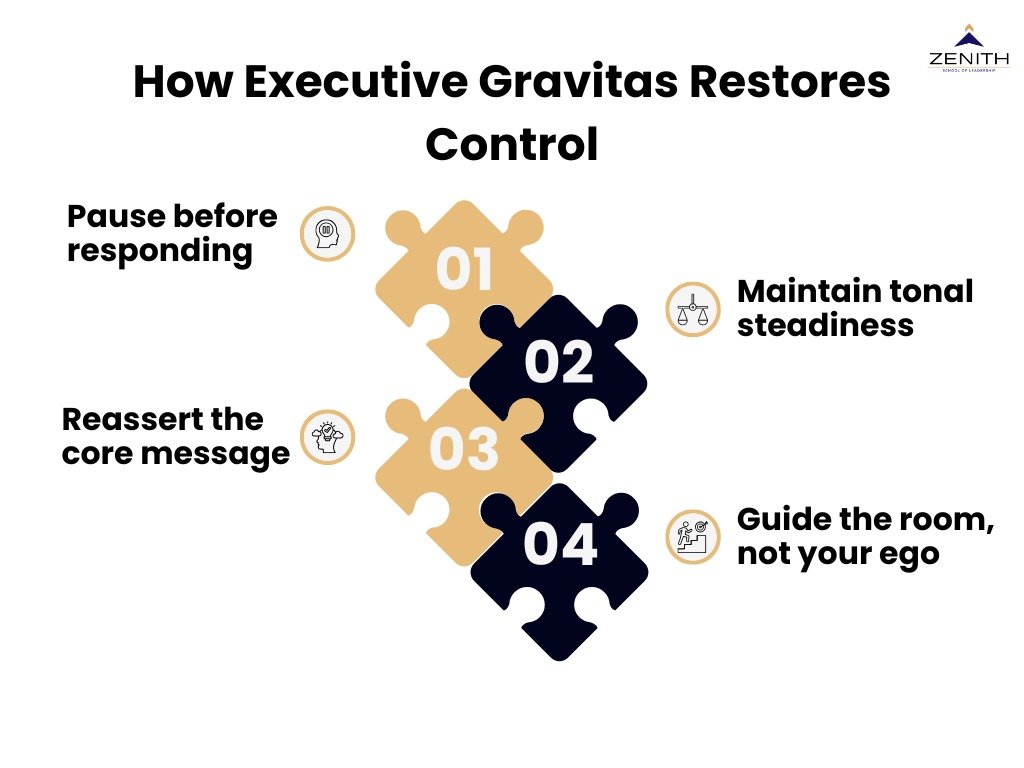
During executive presentations or leadership meetings, stakeholders may question assumptions earlier than expected or challenge the logic of a proposal. These moments trigger a natural psychological response that encourages speakers to protect their credibility.
This response often produces observable communication changes. Speech becomes faster, explanations become longer, and additional details appear in an attempt to demonstrate expertise.
Ironically this behavior can weaken the message.
When communication becomes rushed or overly detailed, audiences focus on the tension in the speaker’s delivery rather than the strategic idea being presented.
Experienced leaders respond differently.
When pressure increases, they simplify their communication rather than expanding it. They slow their pace slightly, deliver concise responses, and redirect the conversation toward the decision that needs to be made.
This disciplined communication approach allows the leader to maintain control of the discussion even in challenging situations.
Executive Speaking Gravitas: Lessons from Tim Cook and Satya Nadella
Two modern technology leaders offer strong examples of executive speaking gravitas.
Apple CEO Tim Cook frequently faces challenging questions during investor briefings and product announcements. His communication pattern remains remarkably structured. When responding to difficult questions, Cook typically acknowledges the concern briefly before reconnecting the discussion to Apple’s broader strategic direction.
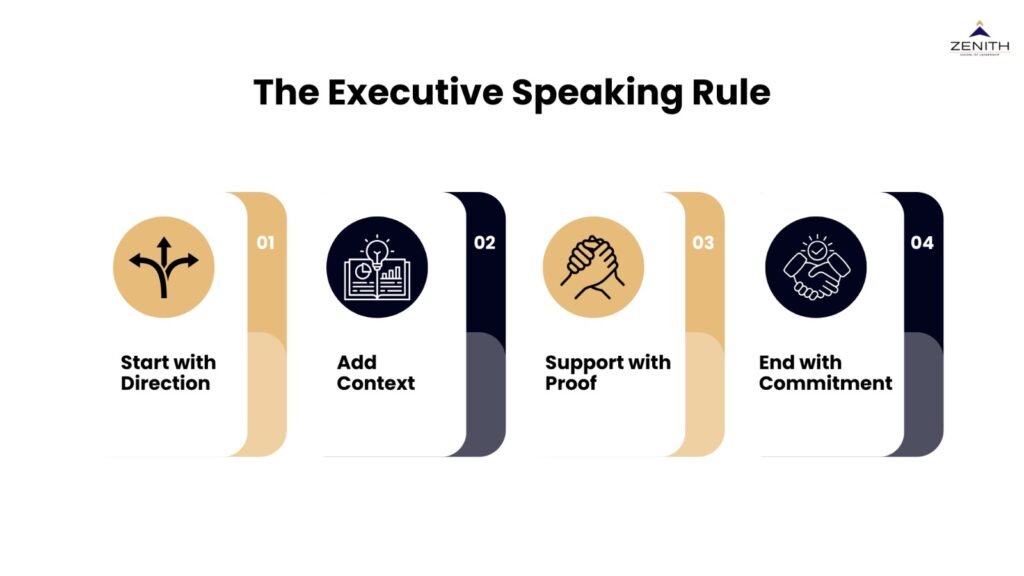
Rather than becoming defensive, he maintains a calm tone and reinforces the long-term priorities of the company. This approach keeps discussions focused on strategy rather than short-term reactions.
Satya Nadella demonstrates a similar communication discipline during Microsoft’s strategic transformation toward cloud computing. Nadella consistently communicates complex strategic changes through concise, forward-looking statements. Even during periods of uncertainty, his communication remains measured and focused on long-term direction.
These leaders illustrate an important insight about executive public speaking.
Gravitas rarely comes from dramatic delivery or charismatic performance. It emerges from disciplined thinking, controlled pacing, and the ability to guide discussions toward strategic clarity.
The Strategic Pause: A Research-Backed Communication Technique
One of the most underestimated techniques in executive public speaking is the deliberate pause.
Research published in the Journal of Language and Social Psychology by Rosenberg and Hirschberg examined how vocal pacing and pauses influence audience perception. The study found that speakers who used controlled pauses were perceived as more confident and persuasive than speakers who spoke continuously.
Communication analysts studying political speeches have also observed similar patterns. Former U.S. President Barack Obama frequently used deliberate pauses after key statements. These pauses allowed audiences to process the message and strengthened the perceived authority of the speaker.
For executives, pauses serve an additional purpose.
They prevent rushed responses when difficult questions arise. A brief pause before answering allows the speaker to organize thoughts and maintain composure.
In executive communication, silence used intentionally can signal confidence and control.
Common Mistakes That Reduce Executive Speaking Gravitas
Many professionals unintentionally weaken their executive presence during presentations or meetings.
One common mistake involves over-explaining ideas. When leaders provide excessive detail before clarifying the central message, audiences may struggle to understand the decision being proposed.
Another challenge occurs when speakers respond defensively to questions. Even subtle defensiveness can shift the tone of the conversation and reduce the perceived authority of the speaker.
A third mistake occurs when speakers attempt to answer every question immediately without pausing. Rapid responses can appear reactive rather than thoughtful.
Recognizing these patterns allows executives to strengthen the communication behaviors that create gravitas.
Developing Public Speaking Skills for Executive Leadership
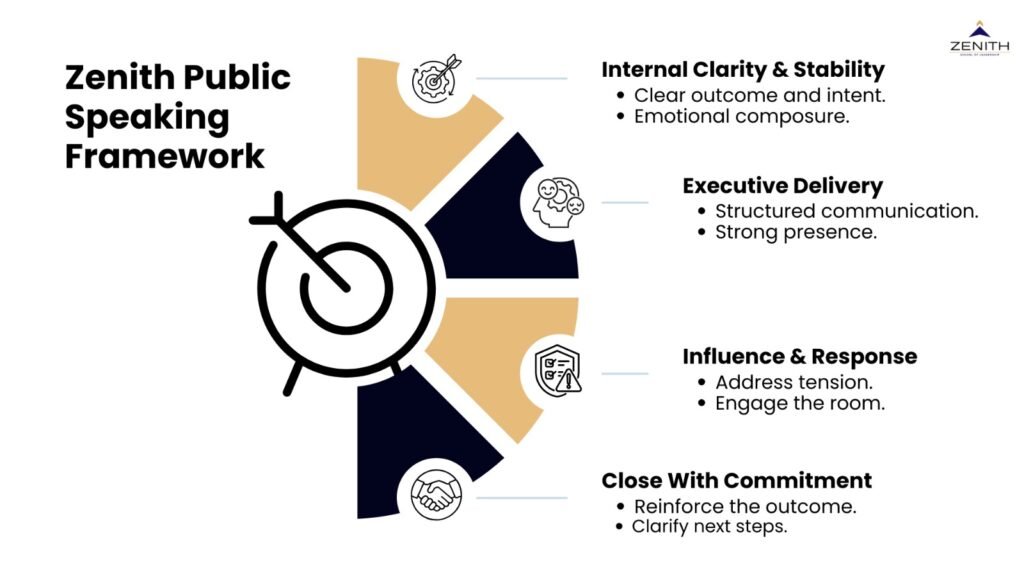
Improving executive communication rarely requires dramatic personality changes. Instead, improvement typically comes from refining a few core communication habits.
Strong executive speakers focus on clarifying the outcome of their message before adding supporting detail. They prepare the decision or recommendation they want the audience to understand.
They also treat public speaking as a leadership activity rather than a performance. Every conversation becomes an opportunity to guide thinking and create alignment.
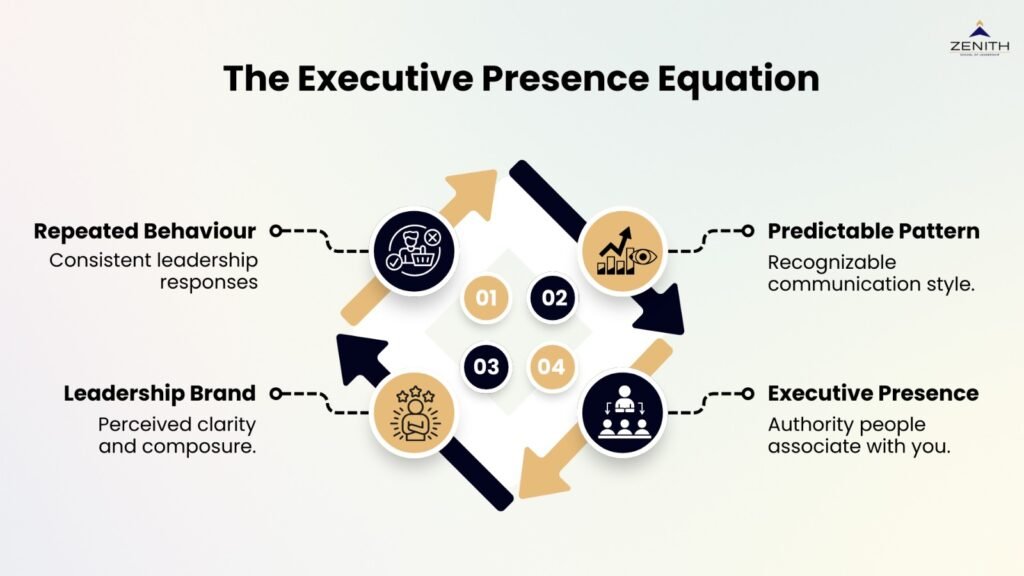
Over time these habits form a recognizable communication pattern. Colleagues begin associating the leader with clarity, composure, and direction.
This perception gradually forms what professionals describe as executive presence.
Key Takeaways: Public Speaking as a Leadership Multiplier
Public speaking for executives acts as a leadership multiplier within organizations.
Clear and disciplined communication allows ideas to spread more effectively, enables teams to understand complex decisions, and accelerates alignment across departments.
Leaders who communicate with structured thinking and calm authority help organizations navigate uncertainty with greater confidence.
Over time this communication clarity becomes one of the most visible signals of leadership capability.
Executives who master this skill are not simply delivering presentations. They are guiding decisions and shaping how organizations move forward.
One week practice to build steadiness fast
For the next seven days, do not practice longer. Practice cleaner.
🕮 Choose one high stakes moment each day where you speak with senior stakeholders.
🕮 Write four lines: Outcome, Composure cue, Risk, Commitment.
🕮 Say those lines out loud once, slowly enough that you can hear control in your voice.
🕮 Add one deliberate pause after your outcome line.
Visible impact looks like this. Your voice stays steady when challenged. Your answers get shorter. People follow your thinking without pulling you into excessive explanation.
Proof checklist
- Do I start with outcome, or do I start with background
- Do I place one deliberate pause after my key line
- Do I answer the decision point, or do I get pulled into details
- Do I name the risk tradeoff cleanly
- Do I close with a commitment, or do I simply end
Table of Content
Read summarized version with
Public speaking for executives becomes difficult in one specific moment. The moment your authority feels exposed.
You may be prepared. You may know the numbers. You may even have rehearsed. Yet a single signal can shift your internal state. A sharper question. A senior person interrupting mid sentence. A skeptical expression. A silence that suddenly feels longer than it is. In that instant, your pace changes without your permission. Your tone tightens. Your mind starts racing to protect your credibility. You begin adding explanations you did not plan. You feel the urge to prove rather than guide.
This is where gravitas matters.
Gravitas is a steady kind of firmness. Your point remains intact, your tone remains calm, and people feel direction instead of tension.
In many corporate settings, executive presence has traditionally been associated with gravitas, strong communication skills, and the right appearance. (hbr.org) When you are speaking as an executive, the first two are the levers that decide whether your message carries weight, especially under pressure.
Executive presence is your clarity staying steady when your status feels threatened.” - Gurleen
TLDR
- Gravitas rises when your pace and structure stay steady under pressure, even when questions get sharper.
- Senior audiences decide trust early. Your opening order and your delivery signals shape whether they track your thinking or start scanning for doubt.
- Most executive speaking issues show up as delivery signals, not knowledge gaps. When you remove the signals that create uncertainty, your authority becomes easier to trust.
- Presence is built as a pattern. Over time, people experience your consistency as your leadership brand. (ccl.org)
- One repeatable speaking sequence beats extra content. Outcome, composure, risk, commitment.
Why executive public speaking collapses under pressure
There is a moment when the talk stops being about the talk.
It is when someone powerful disagrees publicly. When the question has an edge. When a stakeholder signals impatience. When the agenda shifts and you have to respond without your prepared track. In that moment, your body can move into protection mode. Your words become faster. Your tone becomes tighter. Your sentences become longer. You start adding proof because you want to remove doubt quickly.
The problem is that this pattern creates noise. And when there is noise, people stop tracking your thinking and start tracking your state.
Gravitas is the ability to stay clear while pressure rises, so your audience experiences steadiness, not strain.
Gravitas is the real executive speaking skill
Gravitas is control- Control of pace. Control of tone. Control of what you say next. Control of where the conversation goes.
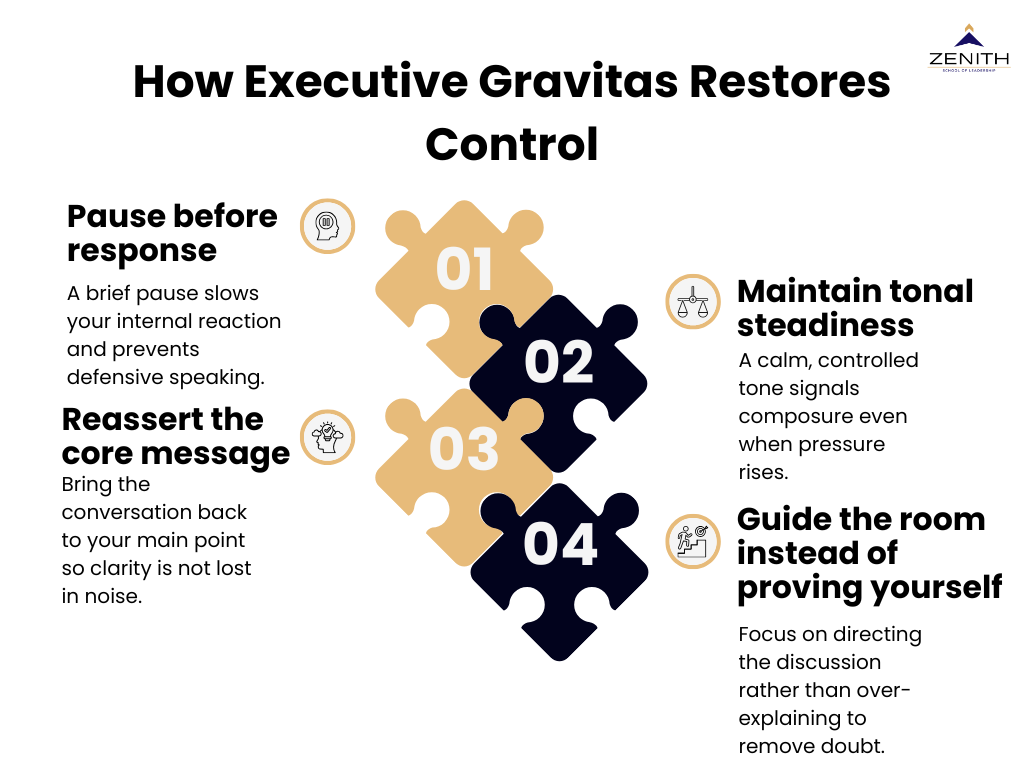
Harvard Business Review frames executive presence through gravitas and communication, which matters because public speaking is where those two become visible instantly. (hbr.org) Your audience may not remember every detail you shared, but they will remember whether your thinking felt organised and whether your presence stayed steady when pressure increased.
What quietly erodes executive authority on stage
In executive public speaking, authority is rarely lost because your idea is weak. It erodes through delivery signals that make the audience feel uncertainty, even when your logic is strong.
- Starting with context overload
When you begin with long background, the audience does not know what to listen for. Senior audiences track outcomes, not chronology. If the outcome is not clear early, attention drops and questions increase.
Using defensive proof too early
When you front load data to protect yourself, it reads like self protection rather than leadership. Proof is powerful after direction is clear. Proof feels noisy before direction is clear.
- Voice drift at the wrong moment
Many executives start strong and then fade. The last six words of your key line often carry the most weight. When your voice drops or speeds up at the end, your authority signal weakens without you noticing. - Answering the question, not the decision
Senior rooms ask questions that pull you into detail. If you answer at detail level, you lose control of the conversation. The executive move is to respond and then lift the group back to the decision point. - Filling every gap with words
Executives lose credibility when they talk through uncertainty. A short pause before a hard question, or after a key statement, makes you look controlled, not uncertain. Research on charismatic speeches highlights how skilled pausing supports perceived charisma and persuasion. (portal.findresearcher.sdu.dk) - Letting one interruption reset your nervous system
An interruption is not a failure. It is a status test. If you react with speed, apology, or sharpness, the audience senses instability. If you acknowledge and reframe calmly, your authority rises. - Closing without a commitment
A strong talk that ends without a clear commitment leaves the audience with information, not direction. Authority is felt when your last line makes the next step obvious and owned.
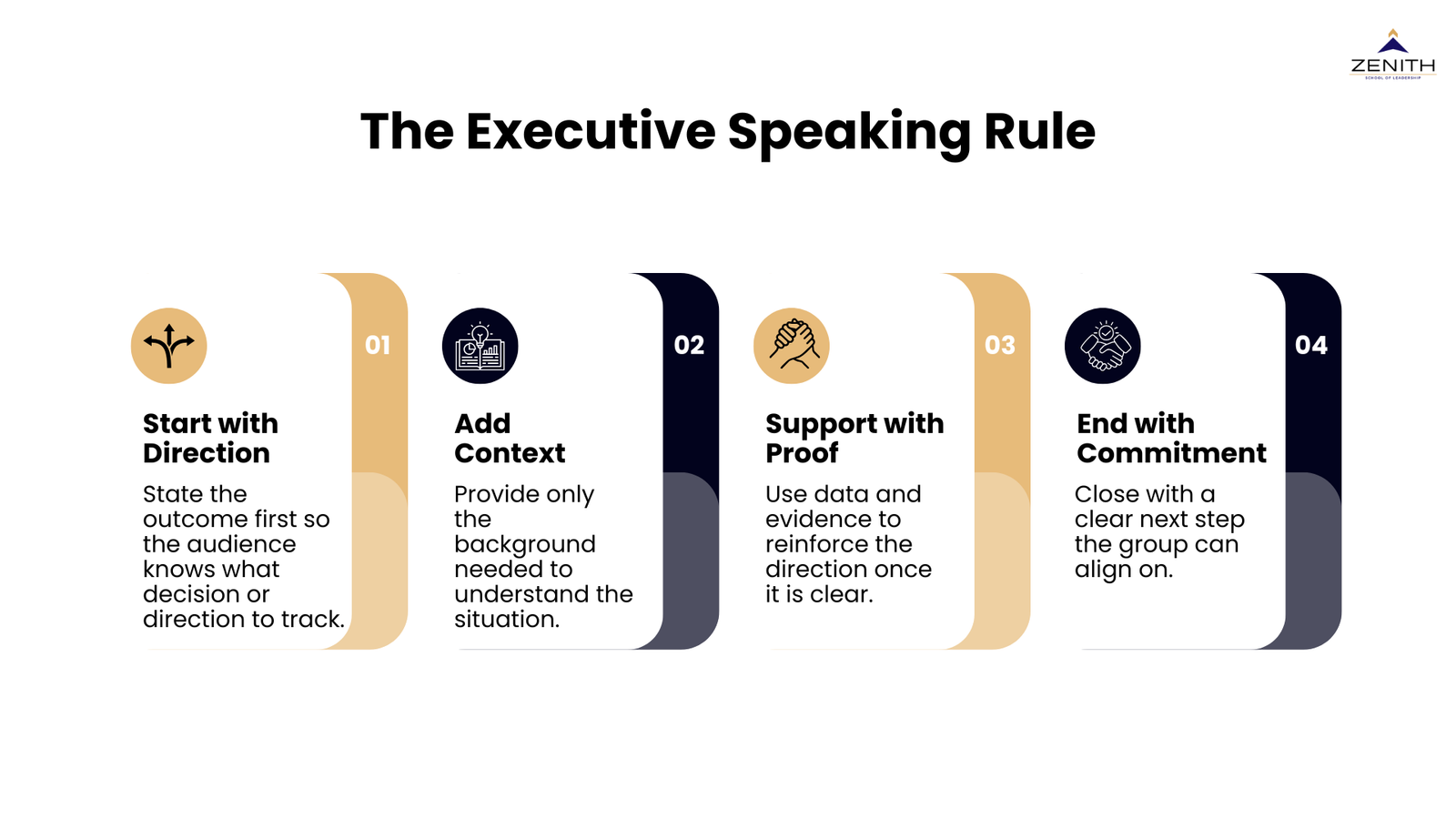
If you fix only one thing, fix your opening order. Start with outcome and direction, then bring in context and proof. Senior audiences do not reward buildup. They reward clarity that moves things forward.
The hidden pattern senior leaders miss
Executives often treat public speaking like an event. A presentation. A keynote. A town hall.
Your audience experiences it as a pattern.
They remember how you handle pushback. How you hold your tone when challenged. Whether your point stays intact when someone tries to pull you into explanation. Whether you can keep direction alive in a tense moment.
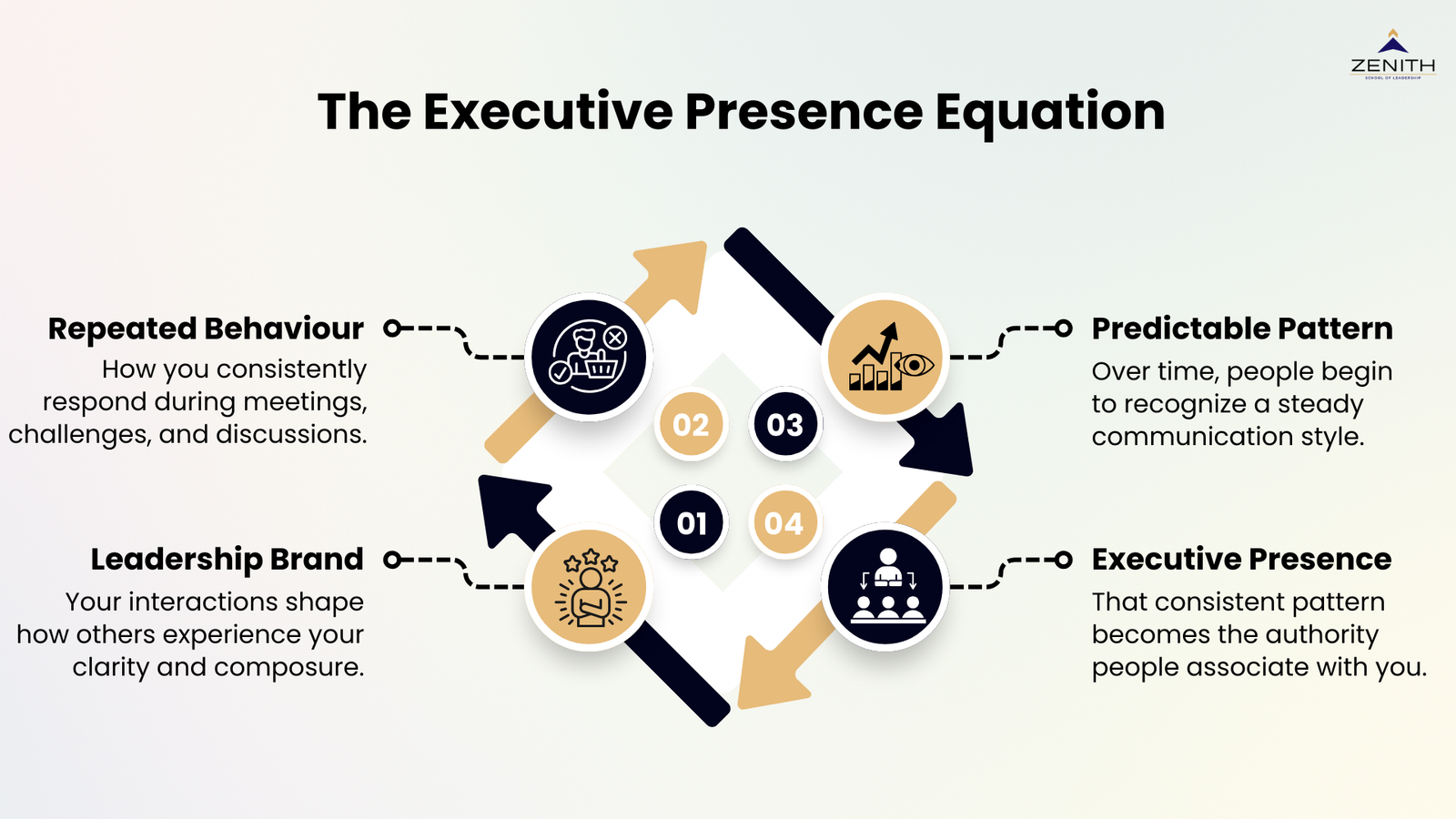
This is why leadership brand becomes relevant. CCL describes leadership brand as how your value and results are experienced through your interactions. (ccl.org) In practical terms, people learn what to expect from you. They learn whether you create clarity, whether you hold composure, whether you move decisions forward. Over time, that pattern becomes your executive presence.
A research backed speaking insight executives can use immediately
Pauses are not just style. They are a control mechanism.
Research examining charismatic speeches, including a case study of Barack Obama, discusses how pauses can augment persuasiveness and perceived charisma, and why effective use of pauses involves more than simply pausing more often. (portal.findresearcher.sdu.dk)
Here is the executive insight. A deliberate pause signals that you are not rushing to be accepted. It gives your point weight, it gives the audience time to process, and it keeps your tempo under control when pressure is high. Place your pause after your outcome line, and again before you answer a hard question.
Zenith Speaking Architecture

This is a practical, repeatable speaking sequence for executives. Built for board updates, leadership reviews, client meetings, town halls, and Q and A. It gives you a clean path through pressure without adding more words.
1. Speak Outcome First
Open with the outcome you are driving, not the background you are carrying. Your Leadership has too much on their mind, they appreciate sharp and crisp communication that shows the outcome without drama.
Examples
Today my goal is to align us on one decision.
By the end of this update, we should be aligned on next steps.
My intention is to create clarity on direction and risk.
2. Hold Composure
“When you learn to hold Composure, then Composure Holds you” – Gurleen signature
Composure is a choice you keep making while you speak.
Hold your pace. Shorten your sentences. Place one deliberate pause after your outcome line. That pause is where gravitas becomes felt.
A useful self test while speaking
Can I hear control in my own voice?
3. Name the Risk
Do not let the audience guess what is at stake. Don’t avoid naming the issue. Name the tradeoff so clearly that the unsurfaced tension also becomes manageable.
Examples
The tradeoff here is speed versus certainty.
The risk is not cost. The risk is delay.
This decision protects customer trust while we accelerate delivery.
4. Close with Commitment
End with a commitment the group can agree to. A commitment is stronger than a conclusion because it creates action.
Examples
If we are aligned, the commitment for this week is X.
The next step we can commit to today is Y.
If we agree on the outcome, this is the decision we lock now.
Executive speaking scripts
Use one. Keep it clean.
- Outcome opener
Today my goal is to align us on one decision. (Then actually keep focus on a single outcome) - Risk clarity line (No hesitation, no change in tonality when you say it.)
The tradeoff here is speed versus certainty.
Commitment close ( Make people commit)
If we are aligned, the next step we commit to today is X.
One week practice to build steadiness fast
For the next seven days, do not practice longer. Practice cleaner.
🕮 Choose one high stakes moment each day where you speak with senior stakeholders.
🕮 Write four lines: Outcome, Composure cue, Risk, Commitment.
🕮 Say those lines out loud once, slowly enough that you can hear control in your voice.
🕮 Add one deliberate pause after your outcome line.
Visible impact looks like this. Your voice stays steady when challenged. Your answers get shorter. People follow your thinking without pulling you into excessive explanation.
Proof checklist
- Do I start with outcome, or do I start with background
- Do I place one deliberate pause after my key line
- Do I answer the decision point, or do I get pulled into details
- Do I name the risk tradeoff cleanly
- Do I close with a commitment, or do I simply end