
14-Week Communication Intelligence Mentorship for Senior Professionals
Communication Intelligence Begins Before You Speak.
At senior levels, people do not experience only your words. They experience how accurately you read the situation, understand the listener, regulate yourself, structure your thinking and guide the conversation towards the outcome that matters.
Your expertise may already be established. The question is whether people experience its full depth when hierarchy, pressure, disagreement or uncertainty enters the conversation.
Mentored by Gurleen Kaur
Founder and Chief Mentor, Zenith School of Leadership
Creator of the 5 Inner Intelligences Framework™
17+ years | 21,000+ professionals | India and GCC
Founder and Chief Mentor, Zenith School of Leadership
Creator of the 5 Inner Intelligences Framework™
17+ years | 21,000+ professionals | India and GCC
For Senior Managers, Directors, VPs, CXOs, Business Heads and experienced professionals carrying significant responsibility.

17+ yearsof pattern recognition behind the mentorship
Since 2009
Zenith Mentorship
21,000+
Professionals Reached
India + GCC
Senior Professional Focus
5
Inner Intelligences Framework™
TRUSTED BY PROFESSIONALS ACROSS LEADING ORGANISATIONS












Before the Words
Your words are only the last visible layer of your communication.
A conventional communication intervention often starts with delivery. Zenith starts earlier because six things are already shaping the communication before the sentence is formed.
Communication Intelligence works on the entire chain that produces the communication.
1What am I assuming?The meaning you give the situation changes the response you prepare.
2What am I noticing?Your attention determines what information enters your thinking and what gets ignored.
3What is happening within me?Emotion, confidence, defensiveness and pressure alter access to what you know.
4How am I reading the listener?Their mindset, priorities, psychology and thought process determine how the message is likely to be received.
5What outcome am I actually trying to create?A conversation changes when the leader is clear about what needs to happen because of it.
6Only then: what deserves to be said?Your words become the visible expression of everything that happened before them.
The 5 Inner Intelligences Framework™
Communication is where the five inner intelligences become visible.
Zenith works on the deeper intelligence behind the response, so communication becomes the visible consequence of stronger thinking, self-awareness, emotional understanding and judgment.
Why this matters now:AI can accelerate drafts, information and analysis. The leader still carries responsibility for judgment, timing, trust, context, consequence and the human response that follows.
Personal
What is happening within me?
Recognise the internal patterns changing how you show up.
Intellectual
What am I missing?
Question assumptions, see patterns and raise perspective.
Communication
What response will create movement?
Shape the message around the listener, context and desired outcome.
Emotional
What is happening within them?
Read emotion, psychology, resistance and what the person is protecting.
Spiritual
What matters beyond this moment?
Hold perspective, values and consequence when ego or urgency could narrow the response.
The Communication Intelligence Gap
The hardest gap to see is the one between what I think I am sharing and what people experience when they listen to me.
Communication Intelligence closes the gap between intent and experience.
What I think I am sharing
I am giving enough context.
I am being respectful with a senior stakeholder.
I am staying calm.
I am being thorough because the issue is important.
I am making sure nobody misunderstands me.
What people may experience when they listen to me
The point is becoming harder to find.
My position sounds less certain than I intended.
I seem distant when I meant to stay composed.
The decision is becoming heavier instead of clearer.
My effort to prevent misunderstanding starts sounding like overexplaining.
Listener Psychology
Can you read your listener before you choose your message?
Every listener arrives with a different mindset, communication preference, pressure, history, level of knowledge and way of processing information. One style cannot serve every interaction.
Communication Intelligence teaches you to align the message with the listener without diluting your own thinking or losing the outcome you are working towards.
How do they process information?
Do they need the conclusion first, context first, evidence, options or time to think?
Do they need the conclusion first, context first, evidence, options or time to think?
What are they protecting?
Status, certainty, time, control, reputation, resources or a previous decision?
Status, certainty, time, control, reputation, resources or a previous decision?
What are they likely to resist?
The idea itself, the implication, the timing, the risk or how the message makes them feel?
The idea itself, the implication, the timing, the risk or how the message makes them feel?
What do they need from me now?
Clarity, confidence, evidence, empathy, challenge, reassurance, a decision or space?
Clarity, confidence, evidence, empathy, challenge, reassurance, a decision or space?
What will help this person receive the message well?
The communication is shaped around the listener and the outcome, not around one preferred speaking style.
The communication is shaped around the listener and the outcome, not around one preferred speaking style.
Outcome Driven Communication
Before you speak, know what the conversation needs to achieve.
A senior conversation may need a decision, alignment, ownership, a boundary, action, trust or a shift in perspective. Clarity about the outcome changes what you include, what you leave out, what you ask and where you stop.
Communication becomes more strategic when every word has a reason to be there.
Decision
Alignment
Ownership
Boundary
Action
Perspective
Raise the Perspective
The highest level of communication is when people think better because you were part of the conversation.
Senior leaders do more than express an opinion clearly. They widen perspective, help people see consequence, reframe problems and raise the quality of thinking around them.
This is where communication becomes leadership.
WidenMove people beyond the most immediate interpretation.
ReframeHelp the group see the problem from a more useful angle.
QuestionAsk what improves the quality of thinking, not merely the quantity of discussion.
ElevateHelp people see impact, consequence and possibility before acting.
Intelligence Under Pressure
Can you still access your best thinking when the situation stops being comfortable?
Expertise matters most when it remains available in the moment you need it.
A senior leader interrupts before you finish your point.
A stakeholder challenges your recommendation without warning.
You are asked for a view before you have had time to prepare.
You need to disagree without damaging a critical relationship.
Silence follows your recommendation and you feel compelled to fill it.
Someone else states your idea more simply and gets the response you wanted.
You need to say No upward while preserving credibility and trust.
Emotion rises, but the conversation still requires judgment.
Why Mentorship
A useful technique may improve a moment. A recurring pattern requires deeper observation.
The same communication difficulty can appear in completely different situations because the problem is being produced by the same internal pattern.
The question is not only, “What should I say differently?” It is, “What keeps making me respond this way?”
Hierarchy changes your authority.You sound clear with your team and become more careful with someone more senior.
Intelligence turns into overexplaining.You see many angles and try to include all of them when pressure rises.
Empathy weakens the boundary.You understand the other person so well that your own position becomes softer than it should.
Preparation reduces spontaneity.You become so invested in getting it right that live thinking becomes harder.
Silence creates unnecessary speech.You keep talking after the message was already complete.
One Connected Progression
The 6-Step Communication Intelligence Framework
Each stage works on a different point where communication can begin to weaken, from the pattern behind the response to the response that must remain available under pressure.
Watch Gurleen Kaur explain the complete progression.
The application becomes available after three minutes of actual viewing.
01
Recognise
See the real pattern.
02
Remove
Stop reinforcing what weakens you.
03
Recalibrate
Change what happens before you speak.
04
Express
Turn thinking into influence.
05
Refine
Close the gap between intent and experience.
06
Integrate
Make the stronger response available when the stakes rise.
Your Professional World Becomes the Practice Ground
You should not have to wait for a workshop exercise to discover whether the learning works.
Meetings where your idea is technically sound but not gaining support.
Difficult conversations you keep postponing because the relationship matters.
Presentations where questions expose whether the thinking is truly integrated.
Leadership moments where you have seconds to decide how to respond.
Stakeholder conversations where one message must work across different mindsets.
Moments where you need to challenge without creating unnecessary resistance.
Times when you need to say less, but make what you say carry greater clarity.
Situations where your own emotional response is altering the quality of the communication.
The 14-Week Mentorship
The structure is clear. The intervention becomes personal.
What we do with that structure depends on what we discover about you.
Two live touchpoints most weeksMentor-led concepts, live thinking, questions and application.
Practice under real dynamicsSpontaneity, disagreement, attention, hierarchy and other people’s reactions stay part of the learning.
Weekly observation and feedbackYour patterns, practice and progress are noticed rather than disappearing inside a program.
Personal interventions when neededMost participants receive approximately 4 to 5 individual interventions with the Head Coach, with Gurleen stepping in personally where the mentorship requires it.

Gurleen Kaur
Founder & Chief Mentor
Founder & Chief Mentor
YOUR MENTOR
Seventeen years changes how quickly a mentor can recognise a pattern.
Gurleen Kaur has spent more than 17 years working with professionals and leaders on the thinking and behavioural patterns that shape communication, judgment, influence, composure, authority and professional growth.
17+
Years of leadership mentorship
21,000+
Professionals reached
India & GCC
Leadership reach
Mentorship in practiceWhen a question can deepen your thinking, she will ask it.When a pattern needs to be named, she will name it.When a framework can shorten your learning curve, she will teach it.When your interpretation needs challenging, she will challenge it.
The objective is not to defend your experience. It is to evolve it.
LEADERS SPEAK
Hear Their Transformation Stories
Nine participant stories. Select any portrait to watch.

Sanjay

Danial
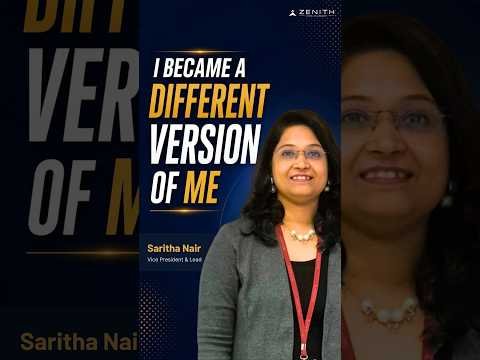
Saritha
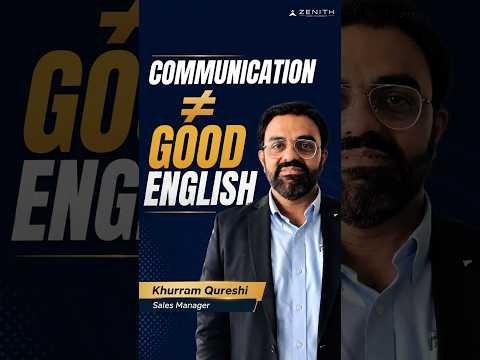
Khurram
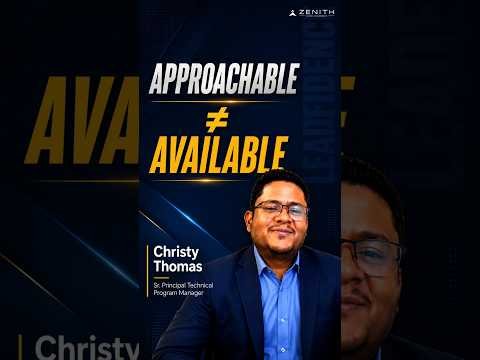
Christy

Juliet

Sudha
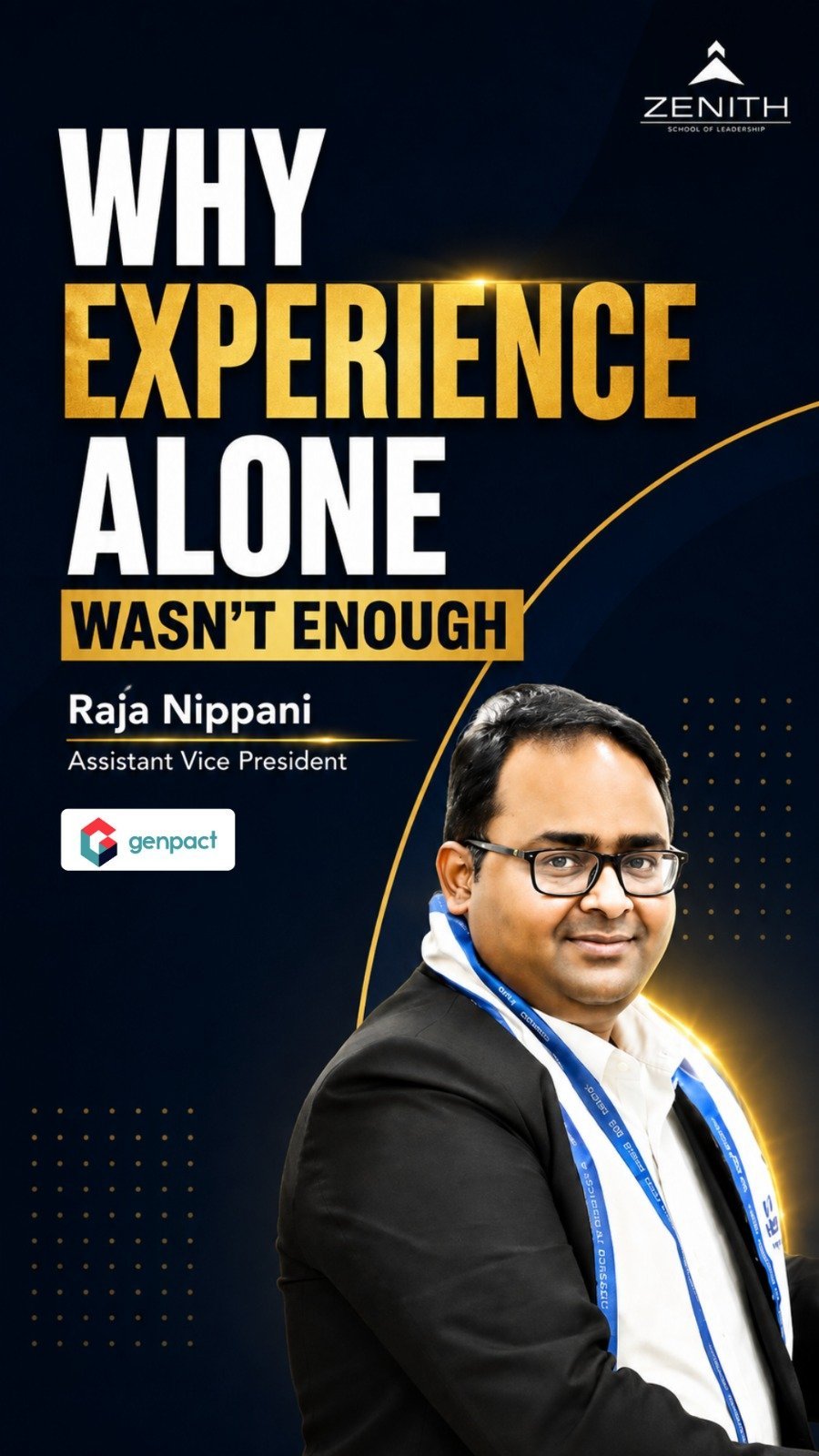
Raja

Ashok
PARTICIPANT EXPERIENCE
What changes when leaders begin seeing themselves and situations differently?
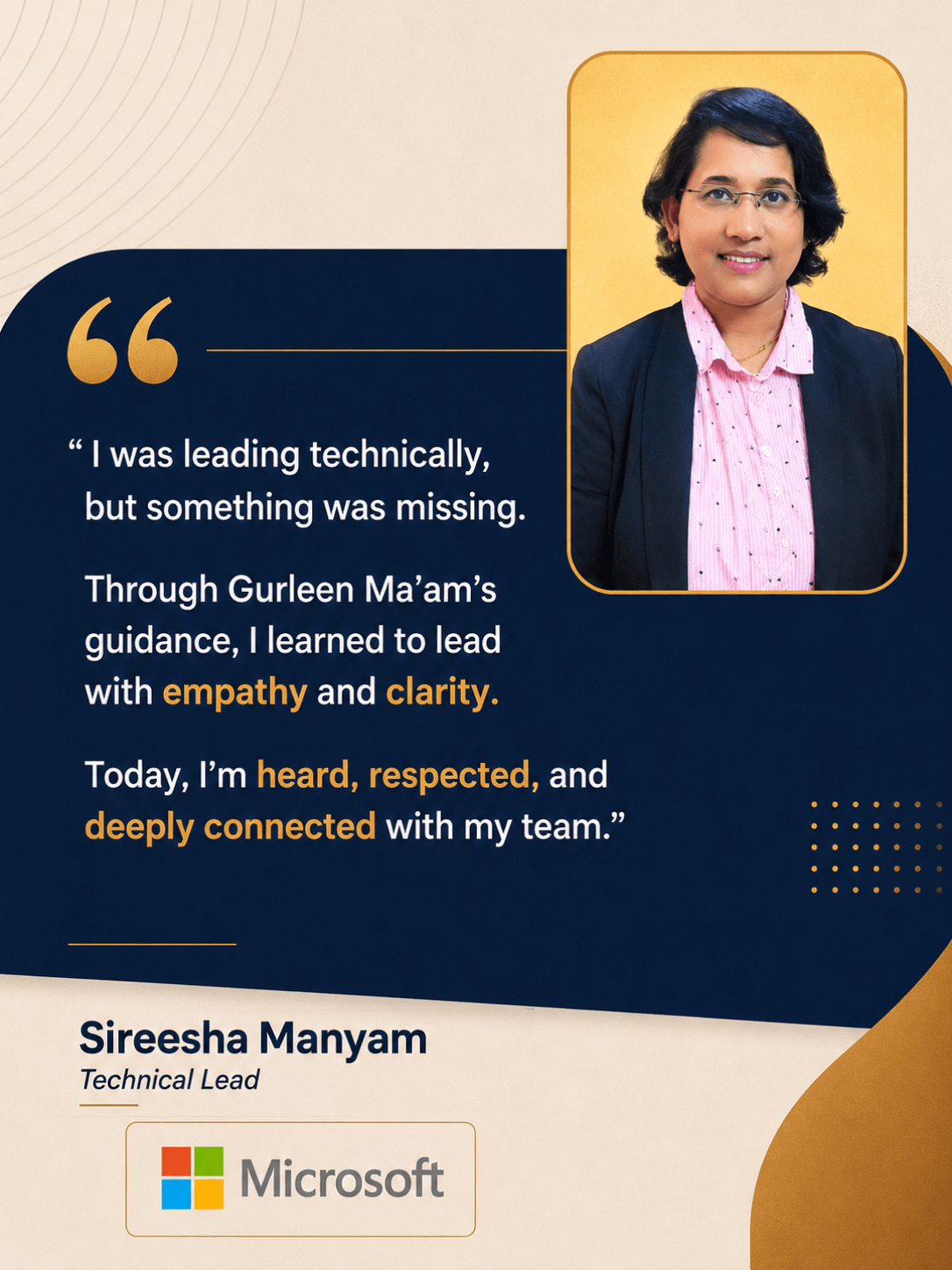
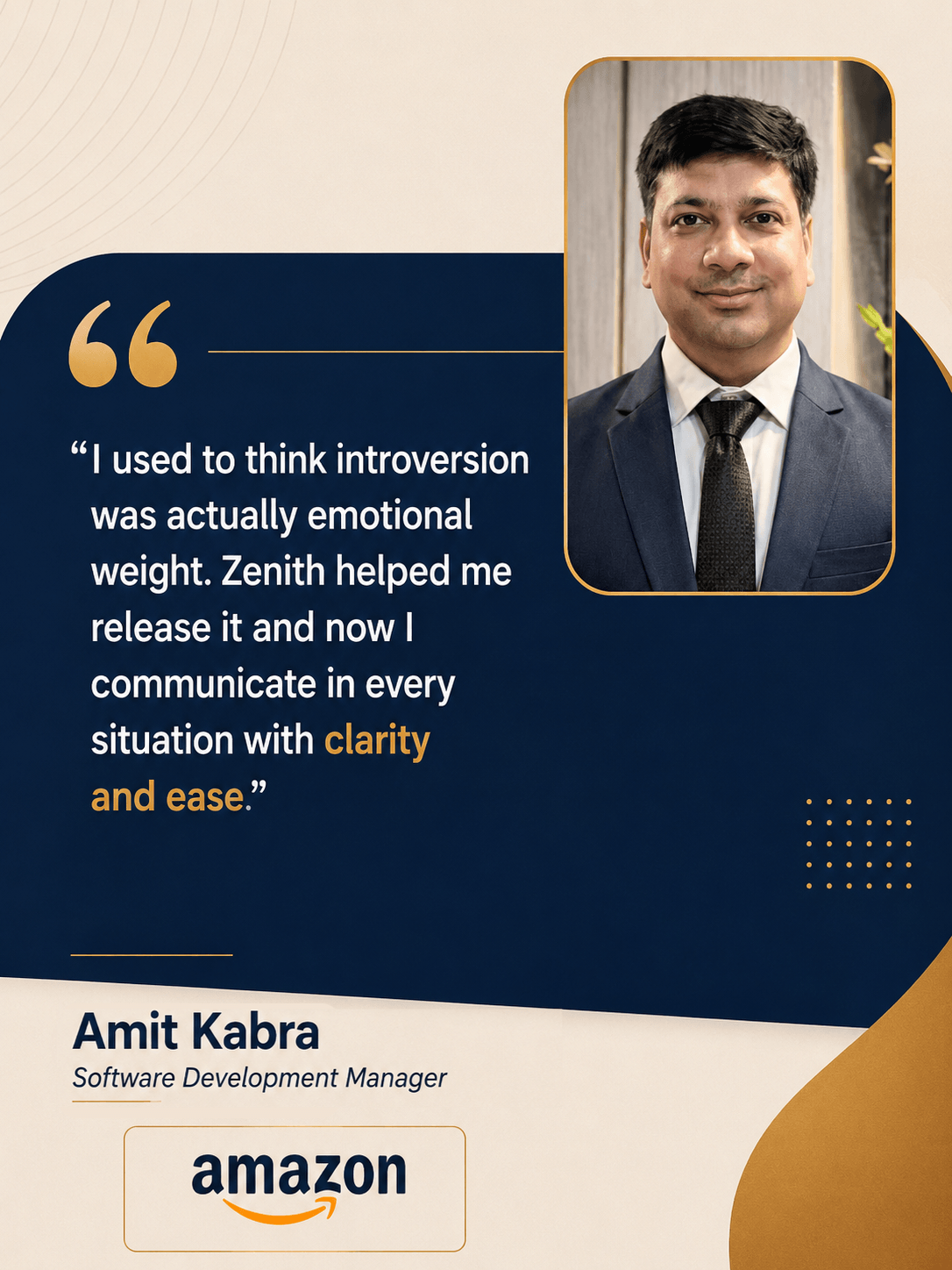
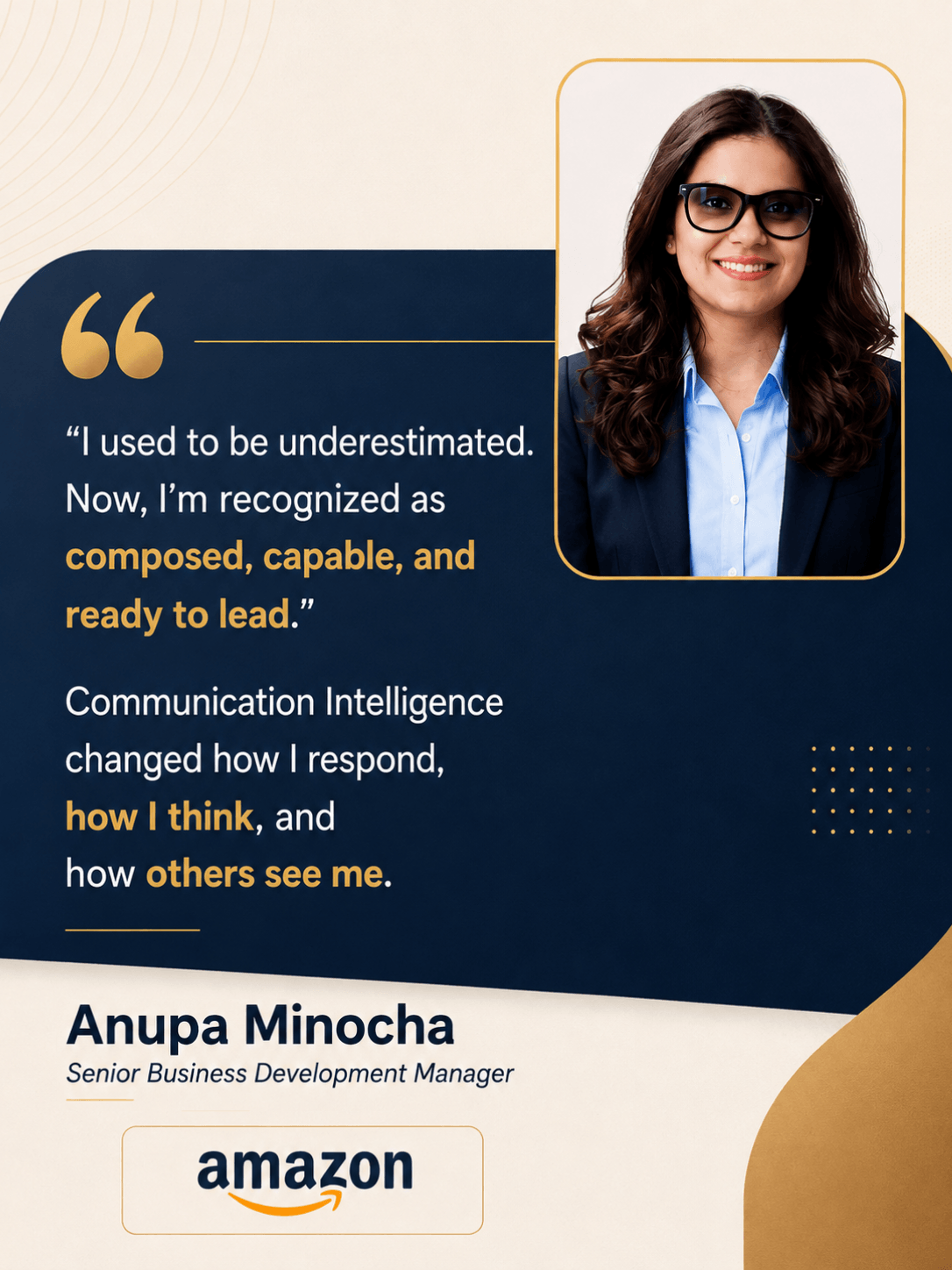
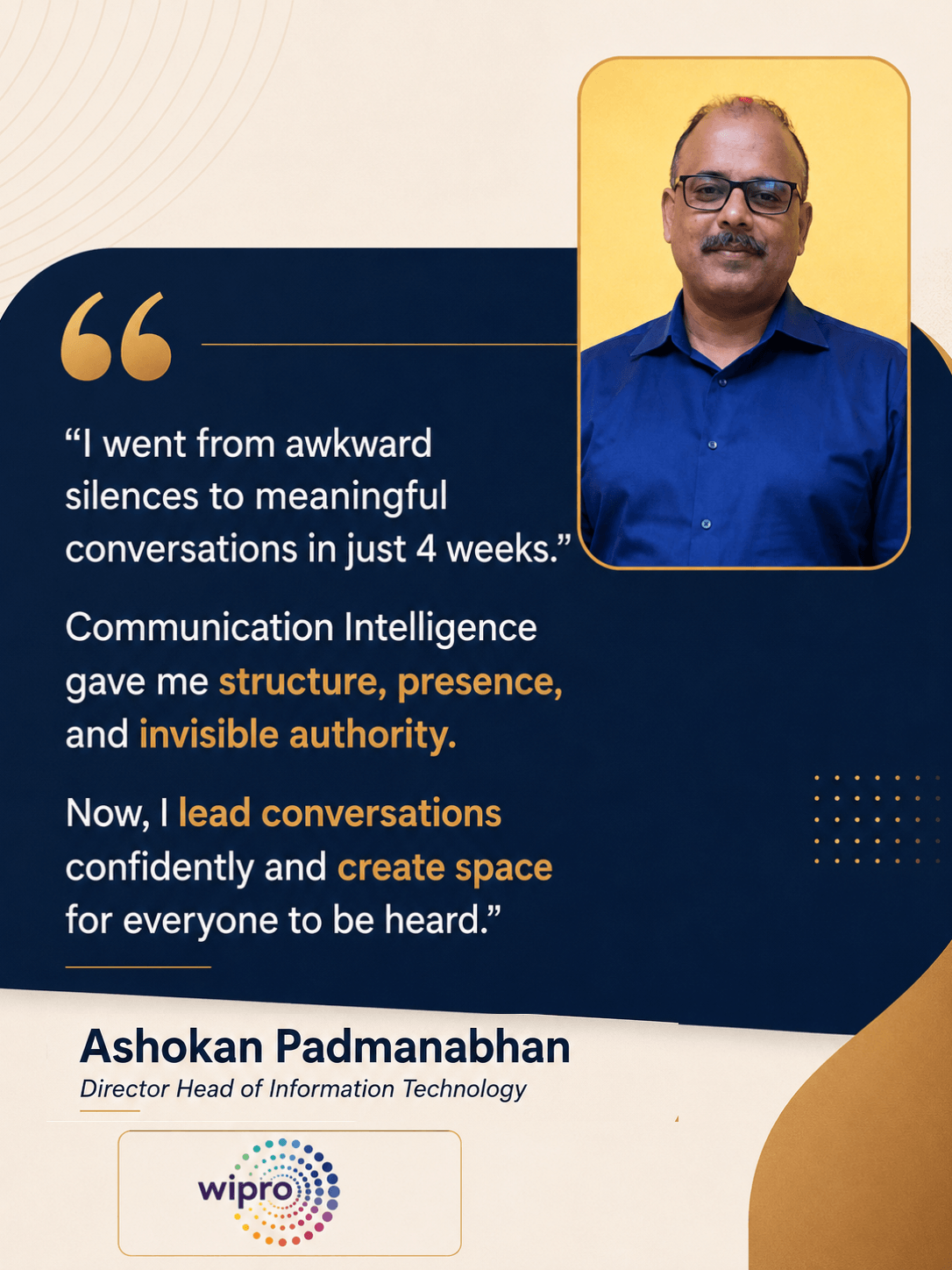
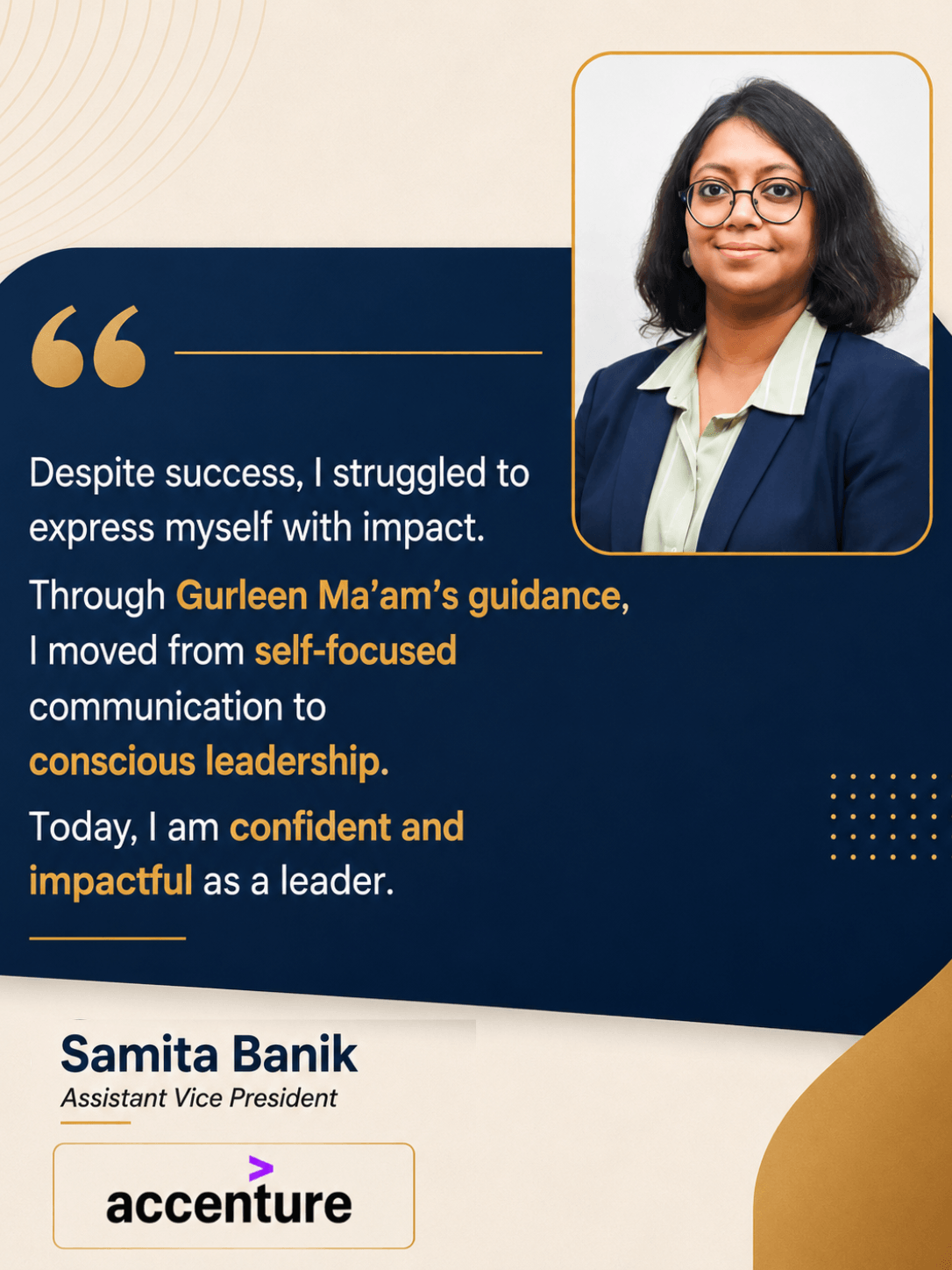
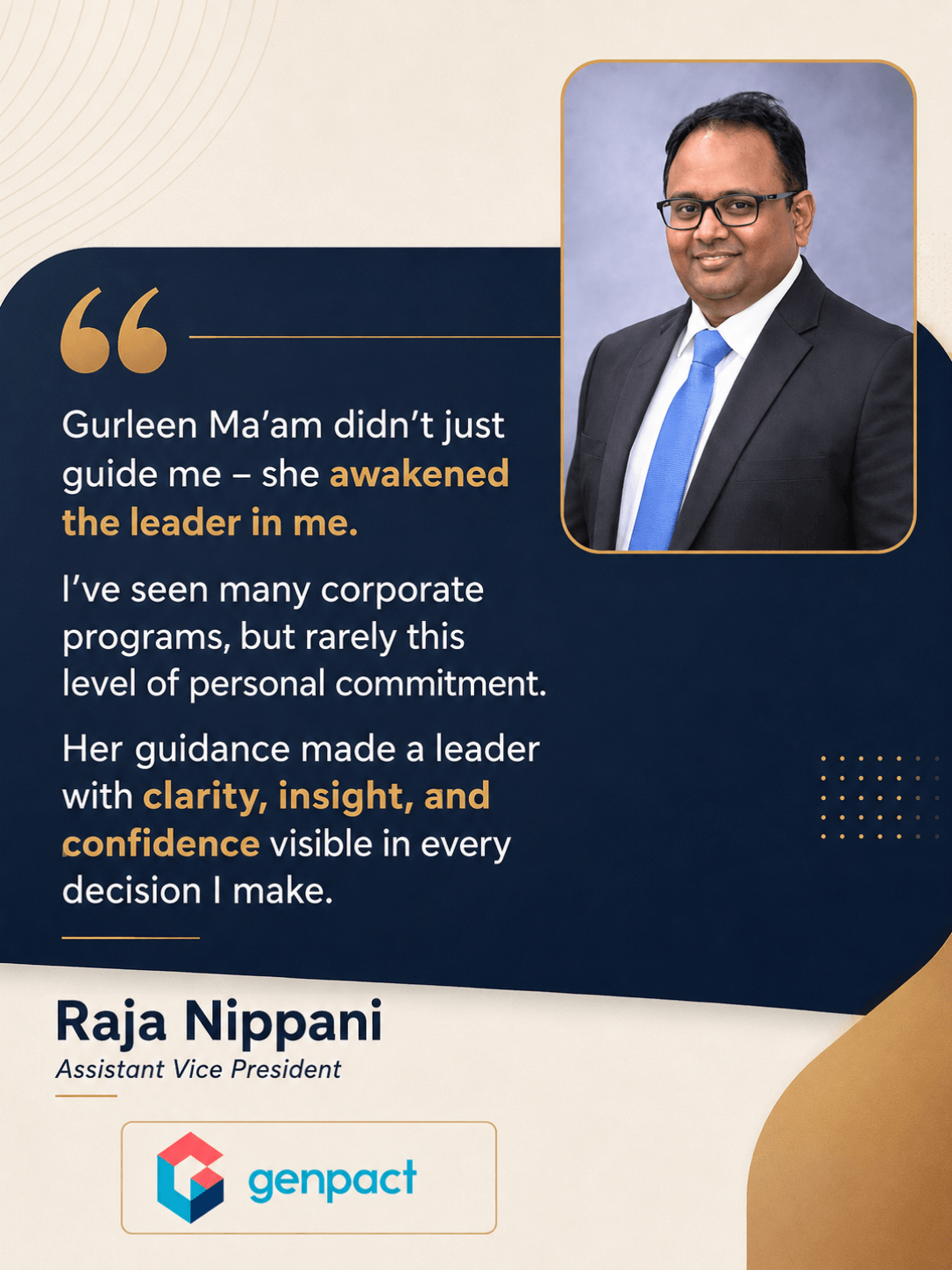
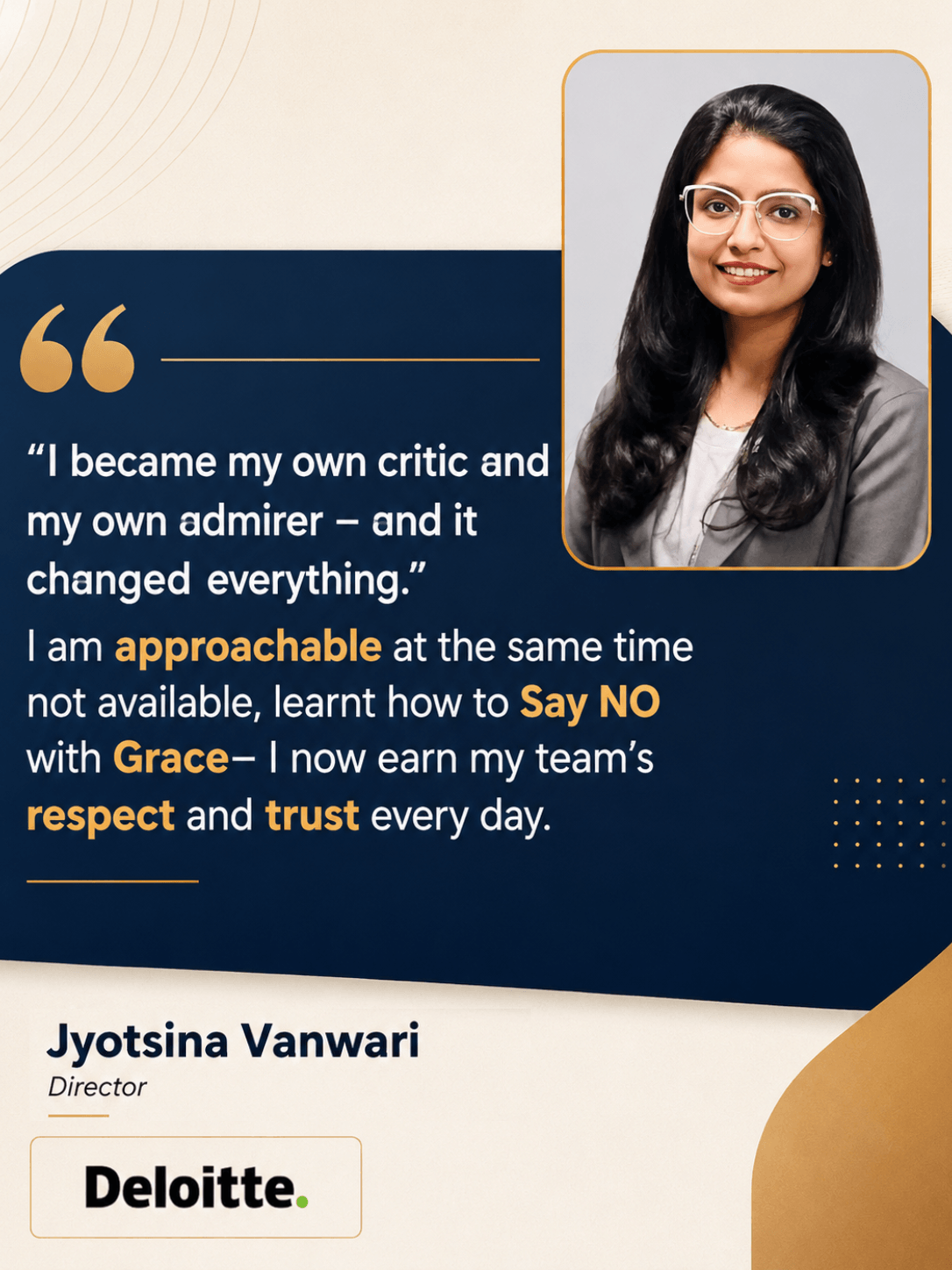
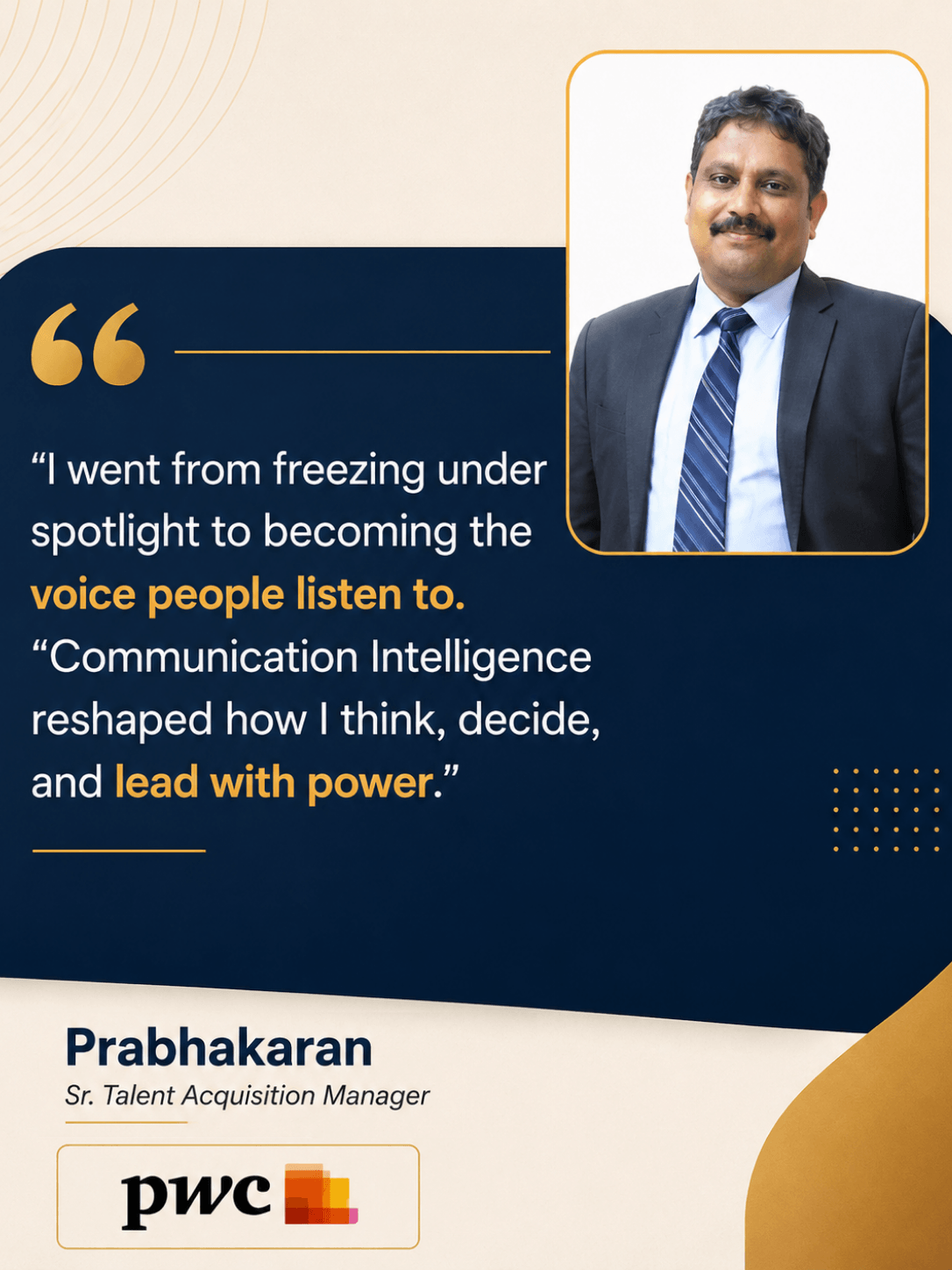
Written Alumni Experiences

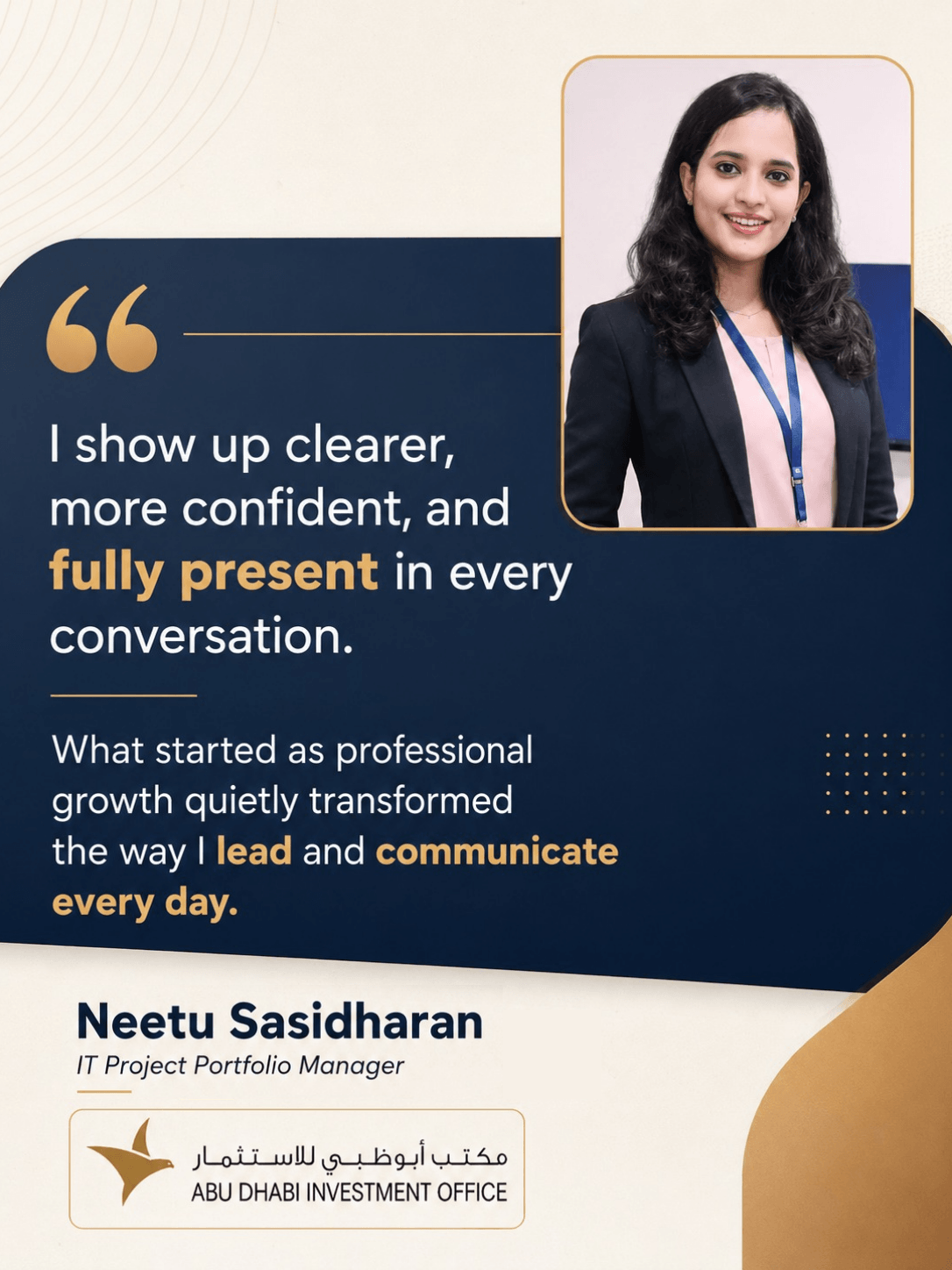
Designed With Discernment
This mentorship is for professionals who expect depth from themselves and from the person mentoring them.
Consider applying if
Your expertise is established, but your impact is not always as consistent as your capability.
You want precise feedback and direct challenge rather than motivational reassurance.
You are prepared to practise inside real professional situations and return ready to examine what happened.
You want a mentor who will sometimes question you, sometimes challenge you and sometimes tell you exactly what she is seeing.
This is unlikely to suit you if
You primarily need spoken-English development.
You want a quick public-speaking or presentation course.
You prefer content you can consume without being observed, challenged or expected to apply it.
You want a certificate more than you want your patterns examined.
Before You Apply
Understand how Zenith thinks before we ask you to consider the mentorship.
The 6-Step Communication Intelligence Framework is designed to help you identify whether your challenge is really communication, or something happening before communication.
After completing it, the private Strategy Session becomes a more useful conversation about your context, patterns and readiness.
Watch the 6-Step Communication Intelligence Framework
Private framework session with Gurleen Kaur.
Your application unlocks after three minutes of actual viewing so the Strategy Session begins with shared context rather than a generic program presentation.
Certification tells me which methodology someone has been trained to use. When I choose a mentor, I ask a different question: what have they spent enough years observing to recognise before I can recognise it myself? I use questions when a question will deepen your thinking. I challenge when your interpretation is limiting you. I teach when a framework can shorten the learning curve. I will also tell you directly what I am seeing when experience makes that the responsible thing to do. That is the mentorship you are entering.
Because communication does not happen in isolation. Private sessions remove many of the dynamics that destabilise people at work: interruption, comparison, attention, disagreement, hierarchy, spontaneity and other people’s reactions. Individual mentoring is used where privacy and depth are needed. The cohort gives us the human dynamics in which your communication actually has to function.
Understanding a framework can happen quickly. Catching yourself using an old pattern in a difficult meeting can take longer. Replacing that pattern under pressure requires repetition, feedback and correction. I am less interested in what you can explain after a workshop than in what remains available when somebody challenges you without warning.
I lead the Communication Intelligence mentorship personally, supported by Zenith’s coaching and execution team. Every meaningful practice contribution, pattern, hesitation and shift is either directly observed by me or brought into the mentoring process. My team strengthens the depth of application. Responsibility for the mentorship remains mine.
It should be. We are not trying to make every participant communicate in one Zenith style. Your patterns, listener, role, hierarchy, context and outcomes are different. The framework gives us a common architecture. The intervention changes according to what we discover about you.
Only when language itself is genuinely the problem. A polished sentence does very little if the thinking behind it is confused, the listener has been misread or the outcome is unclear. I would rather strengthen the intelligence that allows you to create the right response in real time than make you dependent on memorised lines.
Many people who enter Zenith are. The question is not whether you can communicate well in general. The useful question is whether your clarity, judgment and authority remain equally available across hierarchy, pressure, conflict, spontaneous questions and high-consequence conversations. Senior development begins where inconsistency becomes visible.
Commitment. I can work with hesitation, uncertainty and struggle. I cannot do the work for someone who repeatedly chooses not to practise, reflect, participate or take responsibility for growth. You do not need to arrive perfect. You need to arrive willing to be examined and willing to apply what you discover.
No. Capability, readiness, intent and willingness to do serious work all matter. Mentorship is not something you purchase and passively receive. It asks something of both sides, and I would rather someone not enrol than enter without the readiness to use the work well.
A Zenith Program Specialist first establishes context, fit and readiness so Gurleen’s mentoring time is reserved for people for whom the intervention is genuinely appropriate. The session is designed to understand your patterns and determine whether this is the right work for you, not to deliver a generic sales presentation.
Communication Intelligence with Gurleen Kaur
Your expertise should not become less visible simply because the conversation became more difficult.
Strengthen the intelligence behind how you think, read people, shape outcomes and respond when the stakes rise.